









CLARITI FINANCIAL.

Insights

Featured articles

Perspectives on payment observability, the cost of acceptance, and building modern payment operations.

Payment Strategy

4 articles
Why Mastering Payment Fragmentation Is the Key to Unlocking High-Volume Sales in Southeast Asia
Payment Strategy

Why Mastering Payment Fragmentation Is the Key to Unlocking High-Volume Sales in Southeast Asia

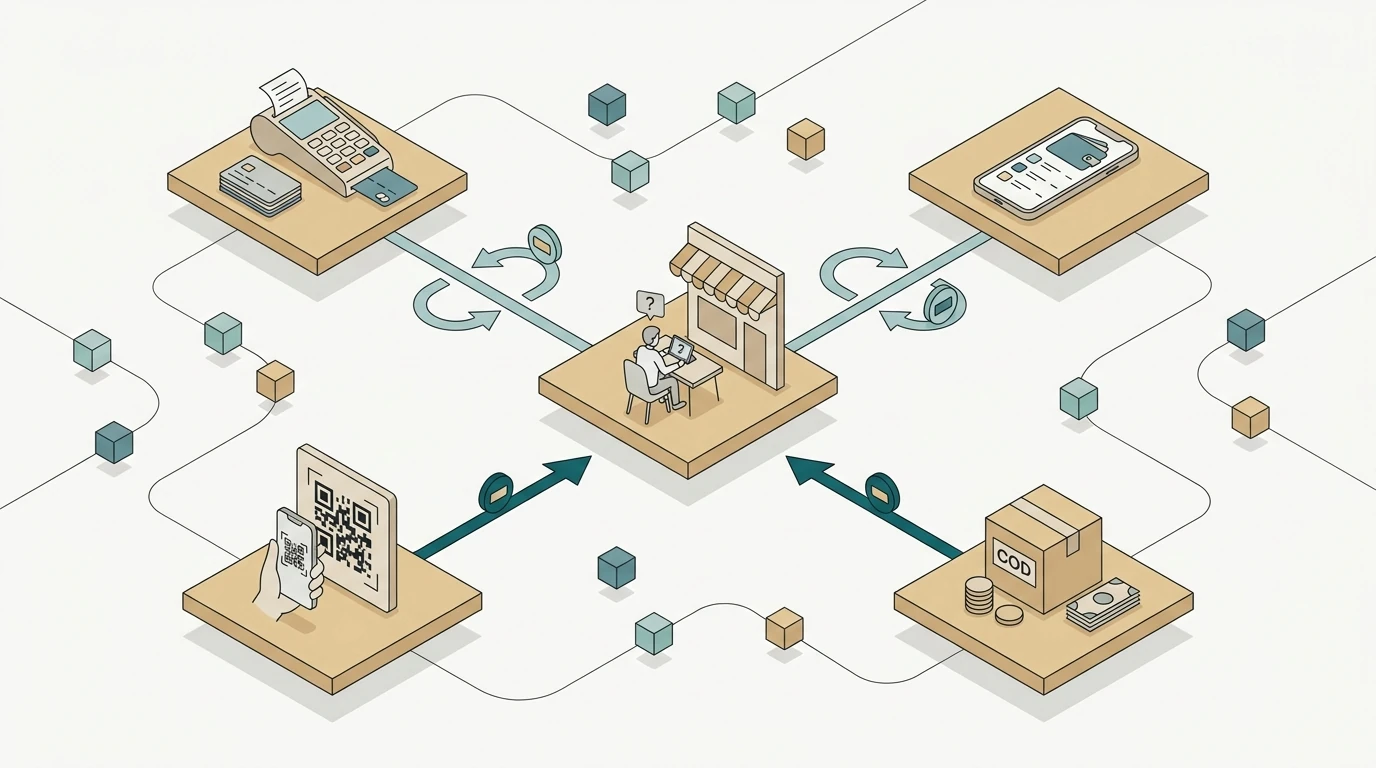
Weak conversion after expanding into Indonesia, the Philippines or Vietnam is usually a checkout problem, not a demand problem. Southeast Asia skipped cards and went from cash straight to phones — offering the right wallet, in the right order, for the right basket size is the difference between a viable low-ticket business and a dead one.

Read article

Interchange++ Doesn't Save You Money. It Shows You Where the Money Went.
Payment Strategy

Interchange++ Doesn't Save You Money. It Shows You Where the Money Went.

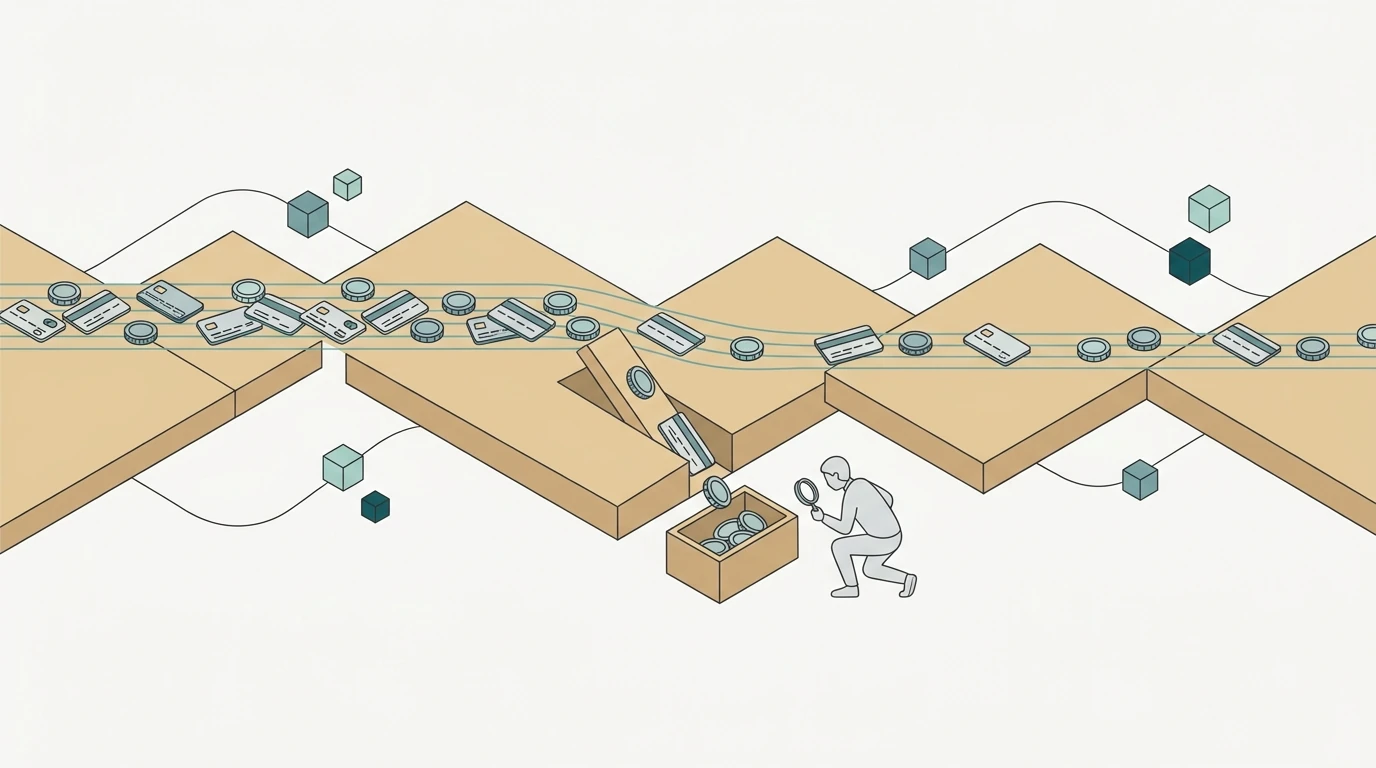
A processor quoting a flat rate has to price for your worst-case transaction, then add margin — so you pay an average plus insurance on every transaction, including the cheap ones. Interchange++ doesn't lower that cost. It shows you which part of it was never negotiable, and which part was always the provider's markup.

Read article

AI Is Making Your Inefficiencies Run Faster
Payment Strategy

AI Is Making Your Inefficiencies Run Faster

Bain's 2026 survey of 951 companies found nearly 40% of firms measured AI cost savings below 10%, well short of target — and 90% are increasing their AI budgets again anyway. The problem isn't the technology. It's the workflow debt underneath it.

Read article

Beyond the Transaction: Why Payments Are Now a Core Strategic Priority for Ambitious Brands
Payment Strategy

Beyond the Transaction: Why Payments Are Now a Core Strategic Priority for Ambitious Brands

Payment processing was once back-office plumbing, noticed only when it broke. Today it's the ultimate interface to the customer — a strategic capability that shapes customer experience, fraud, market expansion and the revenue a business actually captures.

Read article

Best Practices

3 articles

Insights

4 articles

About

Built by insiders

Clariti Financial pairs decades inside payment schemes, acquirers and processors with AI-native systems. Global payments experience applied to Southeast Asia's reality — cross-border corridors, local wallets and QR rails, currency-of-settlement choices and market-by-market acquirer dynamics.

Our mission

One of our missions is to help our customers gain clarity over their payment data. We will have succeeded when the payment function is embedded across functions — marketing, customer success and the wider business, not just finance — so our customers drive loyalty, improve their operational processes, differentiate themselves in competitive markets, and achieve higher outcomes.

Trust & security

Your data, handled like the asset it is

Data handling

  • Runs on files you already have — statements, invoices, settlement reports.
  • Read-only analysis. Nothing touches your production payment stack.
  • Data minimisation: we take what the diagnostic needs, nothing more.

Compliance posture

  • Handling aligned with PCI DSS principles.
  • PDPA-compliant processing.
  • Singapore data residency.

Human oversight

  • Human sign-off before any negotiation or external action.
  • Audit trail on every agent finding.
  • You see the evidence behind every number.

AI governance

  • The numbers come from deterministic rules, not model output.
  • Your data is never used to train models.
  • Model provenance documented per engagement.
  • Agents explain their reasoning — no black-box findings.

We describe our posture as “aligned with” recognised standards. As certifications are completed, this page will say so explicitly.

The engagement

Built around your payment operation

Choose the engagement that fits — start with the diagnostic, upgrade anytime. Commercials are structured around recovered value and discussed at the discovery session.

For first proof

Diagnostic

Quantify what's leaking before committing to anything. The findings justify the programme.

  • Raw-data capture, cleaned and verified
  • Every fee classified into three buckets
  • Benchmark against industry best practice
  • Anomalies surfaced and structured
  • Scheme Fee Audit Report
  • Interchange Analysis
Let's run the discovery

For recovering margin

Recovery Programme

The full 12-week programme — quick wins early, long-term fixes embedded.

  • Everything in Diagnostic
  • Root-cause diagnosis across cost and revenue
  • Quantified savings, line by line
  • Scheme pricing negotiation support
  • Prioritised roadmap to execute
  • Org design & operating model
Let's run the discovery

For staying recovered

Always-On

Agents keep running after the programme — leaks don't stay fixed on their own.

  • Agentic fee tracking on every statement
  • Drift alerts before they become incidents
  • Ongoing mandate and compliance watch
  • Monthly recovery reviews
  • Human sign-off on every action
  • Audit trail on every finding
Let's run the discovery

A 12-week margin recovery programme

Quick wins early, long-term fixes embedded.

  1. Weeks 1–2

    Kickoff

    Align stakeholders and secure data access. Raw data captured, cleaned, verified and organised.

    A shared baseline, ready to analyse

  2. Weeks 3–6

    Discovery

    Benchmark against industry best practice. Apply data templates for classification, grouping and linkages.

    Anomalies surfaced and structured

  3. Weeks 7–10

    Diagnosis

    Run the core analytics engine to audit cost leakages. Embed ongoing monitoring across the business.

    Quantified savings + always-on monitoring

  4. Weeks 11–12

    Roadmap

    Strategic and tactical recommendations for margin recovery, with an implementation plan.

    A prioritised roadmap to execute

How we engage

Diagnostic-first. We quantify the leak before proposing the programme, and we structure commercials around recovered value — terms are discussed at the discovery session, not published as a rate card.

The diagnostic pays for itself — the findings justify the programme.

What we need from you

Scheme data (fee manuals, invoices, volumes, interchange) and operational data (infrastructure, servicing, compliance, allocated costs). Files your teams already have — no integration, no code, no risk to production.

Close the month in hours

Month-end shouldn't be a backlog saved up for the last week of it. Agents reconcile, recompute fees and clear exceptions continuously, so the close becomes a review rather than a rebuild — hours of sign-off instead of days of chasing, with every number traced back to the transaction behind it. Run the discovery to see which parts of your close compress first.