
Payment Strategy
Beyond the Transaction: Why Payments Are Now a Core Strategic Priority for Ambitious Brands
2026 · Payment Strategy
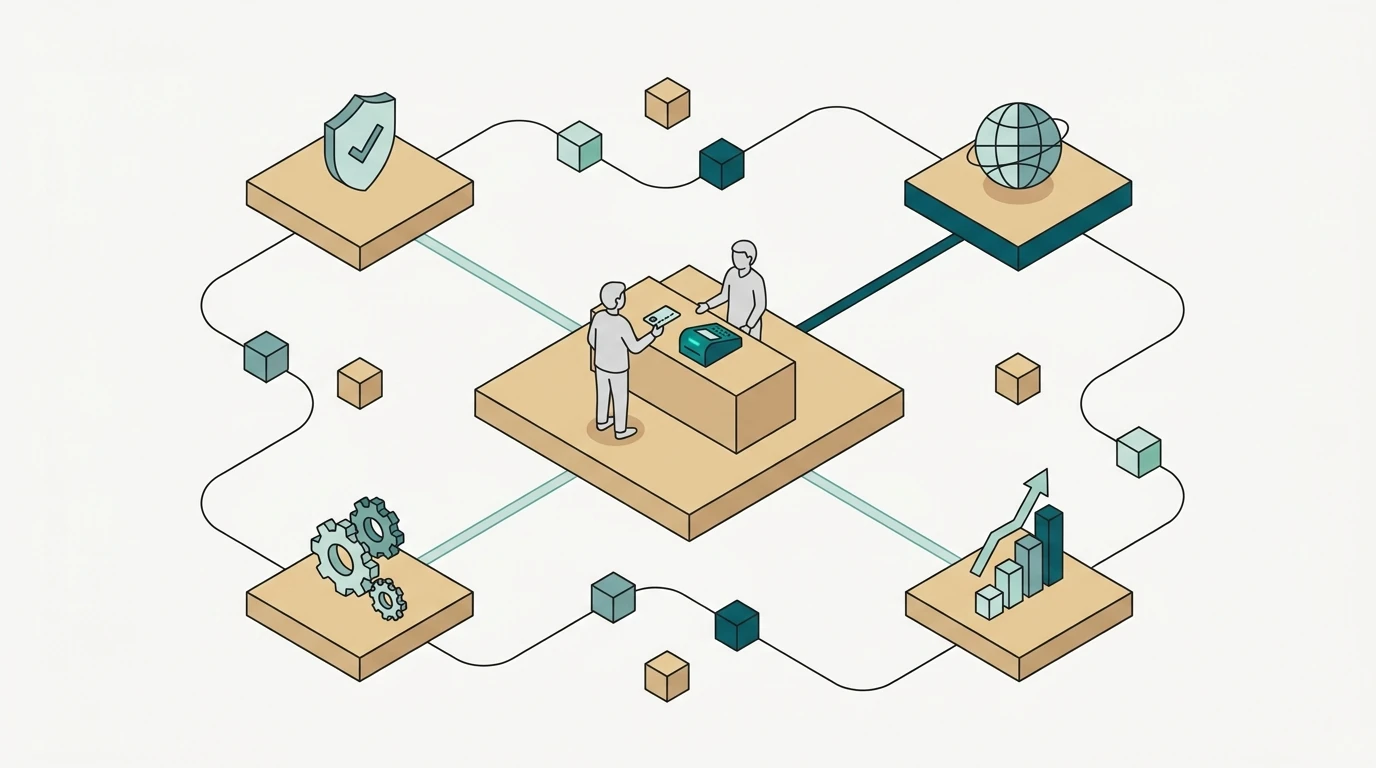
For decades, payment processing was treated as a back-office function—the necessary "plumbing" of commerce that was usually only noticed when something went wrong. Today, that paradigm has shifted entirely. Payments have become a core strategic priority for one undeniable reason: they are the ultimate interface to the customer.
When we recently asked business leaders to identify their top priorities for the next 12 months, the responses painted a clear picture of an industry focused on resilient, scalable growth. The highest-ranking goals included strengthening risk management and fraud prevention, improving the overall customer experience, enhancing technology and automation, driving operational efficiency, and expanding into new markets.
At first glance, these priorities might seem like distinct, siloed objectives managed by different departments. However, there is a critical common thread that runs through all of them: payments.
The way a business handles transactions directly influences every single one of those goals. Payments shape how customers experience a brand at the most critical moment of truth—the checkout. They determine how effectively a business can identify and mitigate fraud without introducing revenue-killing friction for legitimate buyers. Furthermore, payment infrastructure dictates how easily a merchant can enter new international markets and, ultimately, how much revenue they successfully capture at the end of the day.
Given this far-reaching impact, it is no surprise that business leaders are paying close attention to their checkout experience. In our survey, a staggering 71% of respondents told us that payments are "very important" to achieving their broader business goals. The remaining 29% stated they were "somewhat important." Notably, not a single respondent dismissed the relevance of their payment strategy.
These findings reflect a profound shift in how modern businesses think about their financial infrastructure. Payments are no longer viewed merely as a cost of doing business or a simple operational utility. Instead, they are increasingly recognized as a vital strategic capability—one that supports sustainable growth, manages complex risks, and helps businesses compete far more effectively in a crowded global marketplace.